Home / Topic IBS / Circular Economy & Sustainability through Waste Management, Recycling, and ESG

The Circular Mandate: Closing the Loop on Critical Minerals through Advanced Hydrometallurgy and ESG Transparency

Circular Economy & Sustainability through Waste Management, Recycling, and ESG

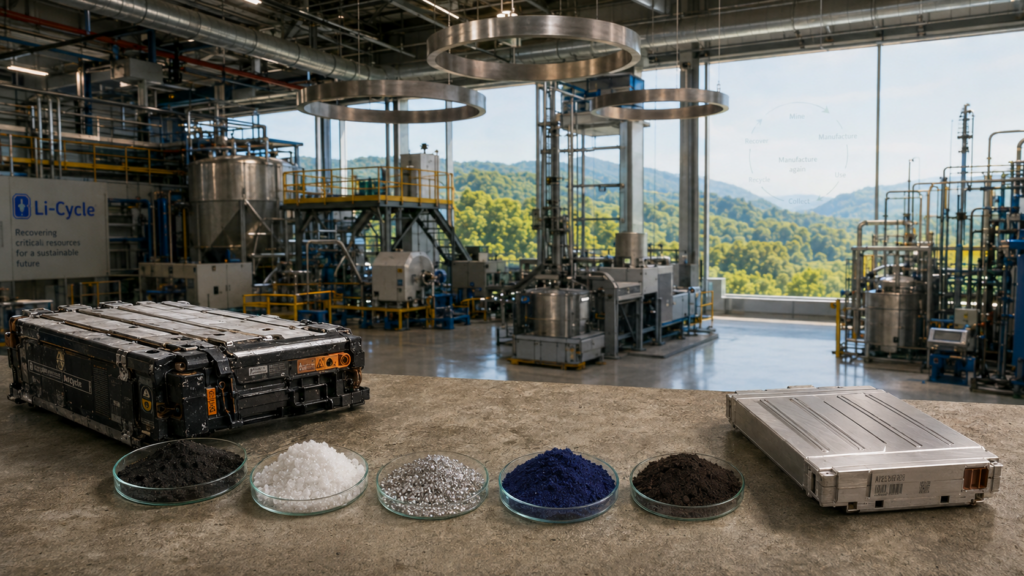
As the global battery industry moves toward terawatt-scale production, the linear “take-make-dispose” model has become an operational and ethical liability. By 2026, the transition to a circular economy is no longer a secondary environmental objective; it is a mechanical necessity for supply chain resilience. With global lithium demand projected to rise fivefold by 2030 and nickel demand following a similar trajectory, the “urban mine”—the collection of end-of-life batteries—has emerged as a critical resource frontier. The integration of advanced waste management, high-recovery recycling, and rigorous Environmental, Social, and Governance (ESG) frameworks is now the defining characteristic of a mature and sovereign battery ecosystem.

The technological cornerstone of the 2026 circular economy is the shift from energy-intensive pyrometallurgy to high-efficiency hydrometallurgical recycling. Traditional smelting processes often lost lithium and aluminum to slag, but modern acid-leaching and solvent extraction techniques now allow for recovery rates exceeding 95% for lithium, cobalt, and nickel. This “closed-loop” manufacturing approach significantly reduces the carbon footprint of battery production, as recycled minerals require up to 80% less energy to process than virgin ores. For industrial hubs like Indonesia, establishing domestic recycling capacity is vital to ensuring that the minerals extracted today remain within the national value chain for decades to come, insulating the economy from the volatility of global commodity markets.

Parallel to material recovery is the institutionalization of the “Second-Life” battery market. As of 2026, standardized health-grading protocols—powered by AI-driven diagnostics—allow for the rapid reassignment of retired electric vehicle (EV) batteries to stationary energy storage systems (BESS). These batteries, which typically retain 70-80% of their original capacity, find a second decade of utility in stabilizing renewable energy grids or providing back-up power for industrial parks. This cascading use-case model significantly amortizes the environmental and economic cost of the battery, effectively lowering the total cost of ownership for EV consumers while providing affordable storage solutions for the New and Renewable Energy (NRE) sector.

ESG compliance has evolved from a voluntary reporting exercise into a mandatory “license to operate” in the global market. The 2026 regulatory landscape is dominated by the full implementation of the Digital Battery Passport, a blockchain-based record that tracks a battery’s journey from the mine site to the recycling facility. This transparency ensures that minerals are sourced without human rights violations and that carbon intensity is accurately reported. For emerging battery leaders, adhering to these global ESG standards is the primary gatekeeper for attracting international green finance and securing long-term offtake agreements with global automotive OEMs who are under intense pressure to meet net-zero targets.

Furthermore, the concept of “Design for Recycling” has finally reached the mass-manufacturing stage. In 2026, new cell architectures are increasingly using water-soluble binders and modular pack designs that allow for automated disassembly. By reducing the complexity of the “black mass” extraction process, manufacturers are lowering the costs of secondary materials, bringing them closer to parity with primary resources. This alignment of economic incentives with environmental outcomes is the ultimate proof that sustainability has become a core driver of industrial profitability.

As the International Battery Summit 2026 convenes, the dialogue centers on the scaling of these circular systems. The summit provides the definitive platform for stakeholders to harmonize recycling standards and ESG reporting metrics across borders. The path to a truly sustainable energy transition requires us to treat every spent battery not as waste, but as a high-value stockpile of future energy. IBS 2026 stands as the catalyst for this systemic shift, ensuring that the battery industry leads the way in demonstrating how industrial growth can be decoupled from environmental degradation. Through the partnerships forged here, we are building an ecosystem that is as resilient as it is renewable.
Other Topics

Upcoming Event

Recent Updates

Stay informed with the latest about Internatnional Battery Summit

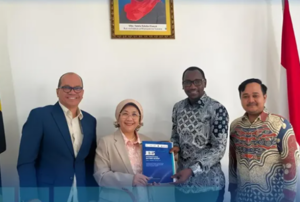
NBRI and Prof. Dr. Burhanudin Abdullah Discuss Indonesia’s Future as a Global Battery Player
On May 3, 2024, the National Battery Research Institute (NBRI) engaged in a pivotal discussion with Prof. Dr. Burhanudin Abdullah, emphasizing Indonesia’s strategic ambitions in the global battery industry. The meeting underscored Indonesia’s commitment to positioning itself as a key player in the battery sector, leveraging its abundant natural resources and advancing technological capabilities. Indonesia, endowed with significant reserves of nickel, cobalt, and lithium, stands poised to capitalize on these resources for battery production. Prof. Dr. Burhanudin Abdullah highlighted the nation’s potential to become a global leader, emphasizing the importance of sustainable practices and technological innovation in this endeavor. The discussion also centered on Indonesia’s pivotal role in supporting the International Battery Summit 2024. Scheduled to be a landmark event, the summit aims to foster international collaboration, innovation, and investment in battery technology. NBRI and Prof. Dr. Burhanudin Abdullah agreed on the criticality of this summit in showcasing Indonesia’s capabilities and forging partnerships with global stakeholders. NBRI’s initiatives include fostering collaborations with international research institutes, universities, and industry leaders to accelerate battery technology advancements. This proactive approach not only enhances Indonesia’s competitiveness but also contributes to global efforts in sustainable energy solutions and electric vehicle (EV) adoption. Looking ahead, Indonesia’s participation in the International Battery Summit 2024 is set to bolster its position as a hub for battery research, manufacturing, and innovation. The summit will provide a platform for showcasing Indonesia’s progress, attracting investments, and driving economic growth through the battery industry.
3 May 2024
NBRI and US Embassy Discuss Future Collaboration at Battery 2EV Workshop
20 May 2024 The National Battery Research Institute (NBRI) recently held a significant meeting with representatives from the US Embassy during the Battery 2EV Workshop at the Mandarin Oriental. The focus of the discussion was on exploring future collaboration for the upcoming International Battery Summit 2024. Key figures in attendance included Mr. Valenzio from the US Embassy and Prof. Evvy Kartini, the founder of NBRI. The meeting emphasized the importance of international partnerships in advancing battery technology and promoting the adoption of electric vehicles (EVs). Both parties expressed a strong commitment to working together to address global energy challenges. During the workshop, Prof. Kartini highlighted the progress NBRI has made in battery research and development. She also outlined the goals of the International Battery Summit 2024, which aims to bring together experts, policymakers, and industry leaders to discuss the latest advancements and future directions in battery technology and EVs. Mr. Valenzio commended NBRI’s efforts and reiterated the US Embassy’s support for initiatives that foster innovation and sustainable energy solutions. He stressed the potential benefits of such collaborations, not only for Indonesia and the United States but also for the global community. This meeting marks a pivotal step in strengthening the partnership between NBRI and the US Embassy. By joining forces, they aim to drive significant advancements in battery technology and contribute to the growth of the electric vehicle industry, ultimately benefiting economies and the environment worldwide. #NBRI #USEmbassy #BatteryConference #Battery #ElectricVehicles #EV #Innovation #Collaboration #InternationalBatterySummit2024
20 May 2024
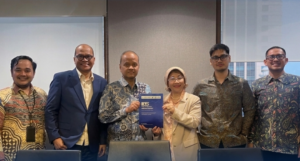
NBRI and Kemenkomarvest Discuss Future Collaboration for International Battery Summit 2024
31 May 2024 The National Battery Research Institute (NBRI) and the Coordinating Ministry for Maritime and Investment Affairs (Kemenkomarvest) recently held a meeting to discuss future collaborations for the International Battery Summit 2024. This strategic discussion aims to position Indonesia as a key player in the global battery industry, focusing on innovation and sustainable development. During the meeting, representatives from both organizations explored potential partnerships and joint initiatives. The conversation highlighted the importance of integrating cutting-edge battery technologies with Indonesia’s growing focus on renewable energy and electric vehicles (EVs). By leveraging their combined expertise, NBRI and Kemenkomarvest plan to advance the country’s capabilities in battery manufacturing and research. The International Battery Summit 2024 will serve as a platform for showcasing the latest advancements in battery technology, with a special emphasis on sustainability and efficiency. The collaboration between NBRI and Kemenkomarvest is expected to attract international stakeholders, investors, and industry leaders, fostering a collaborative environment for future innovations. Kemenkomarvest’s involvement underscores the Indonesian government’s commitment to supporting the battery industry’s growth. This partnership aims to enhance Indonesia’s position in the global market, driving economic growth and technological advancements. The summit will also provide opportunities for networking, knowledge exchange, and strategic alliances. As preparations for the International Battery Summit 2024 continue, the collaboration between NBRI and Kemenkomarvest promises to bring significant benefits to Indonesia’s battery industry. By working together, they aim to create a robust ecosystem for battery research, development, and commercialization, ultimately contributing to the global transition towards sustainable energy solutions. #NBRI #Kemenkomarvest #BatteryConference #Battery #ElectricVehicles #EV #Innovation #Collaboration #Sustainability #EnergyTransition #Indonesia #BatterySummit2024
31 May 2024
Kadin Indonesia Joins NBRI in Planning Future Collaboration for International Battery Summit 2024
In a significant development for Indonesia’s battery industry, Kadin Indonesia has partnered with the National Battery Research Institute (NBRI) to co-host and plan the International Battery Summit 2024. This collaborative effort aims to enhance the country’s position in the global battery market by fostering innovation and sustainable practices in battery technology. Scheduled for May 17, 2026, this partnership signifies a strategic alignment between NBRI, a leader in battery research, and Kadin Indonesia, representing the nation’s business community. Together, they seek to leverage their expertise and networks to create a platform that promotes advancements in battery technology and accelerates the adoption of electric vehicles (EVs) and renewable energy solutions. The International Battery Summit 2024 will feature discussions on key topics such as battery manufacturing advancements, sustainable energy storage solutions, and regulatory frameworks. It will bring together industry experts, government officials, and stakeholders to exchange insights, forge partnerships, and drive innovation in the battery sector. Through this collaboration, NBRI and Kadin Indonesia aim to highlight Indonesia’s capabilities in battery technology, attract investments, and establish the country as a hub for sustainable energy solutions. This initiative underscores their commitment to shaping the future of the battery industry and supporting Indonesia’s transition towards clean energy and EV adoption. #NBRI #KadinIndonesia #InternationalBatterySummit #BatteryConference #ElectricVehicle #SustainableEnergy #BatteryTechnology
17 Mei 2024
NBRI Partners with ThermoFisher for International Battery Summit 2024 Collaboration
On June 5, 2026, NBRI (National Battery Research Institute) announced a strategic partnership with ThermoFisher to enhance their participation in the upcoming International Battery Summit 2024. This collaboration aims to integrate ThermoFisher’s expertise in analytical instruments with NBRI’s advancements in battery technology, fostering innovations crucial for the future of energy storage. The meeting between NBRI and ThermoFisher highlighted mutual interests in advancing battery research and development (R&D), particularly in optimizing battery performance and safety standards. By leveraging ThermoFisher’s analytical capabilities and NBRI’s technological insights, both entities seek to propel the global battery industry forward, addressing challenges in sustainability and efficiency. The partnership underscores a commitment to exploring new frontiers in battery technology, essential for accelerating the adoption of electric vehicles (EVs) and promoting sustainable energy solutions. Together, NBRI and ThermoFisher aim to contribute significantly to the dialogue at the International Battery Summit 2024, facilitating knowledge exchange and strategic collaborations among industry leaders and stakeholders. Stay tuned for updates as NBRI and ThermoFisher prepare to showcase their collaborative efforts and innovations at the International Battery Summit 2024, driving advancements in battery technology and shaping the future of clean energy solutions.
5 June 2024
Key Dialogue with Ministry of Defense’s General Directorate of Defense Planning to Enhance Collaboration
On April 18, 2024, NBRI and the Ministry of Defense’s General Directorate of Defense Planning convened at the Ministry of Defense and Planning Headquarter. With key stakeholders present, including NBRI’s founder and Rear Admiral Supo Dwi Diantara, S.T., M.Tr. Opsla., IPU., M.A., M.S.P., the discussion focused on supporting the upcoming International Battery Summit. Together, they explored collaboration opportunities in battery R&D, with a focus on defense applications.
18 April 2024

Terms & Conditions

By clicking/tapping the registration button (In-person/Online), you agree to abide by these Terms and Conditions. Please read them carefully before making your purchase.

Ticket Purchase

  • The tickets must be purchased through the official event website.
  • Tickets are non-transferable and non-refundable.
  • The ticket price is determined based on the participant’s preferred attendance option, as detailed in the ‘Preferred Attendance Option Pricing’ section

Preferred Attendance-Based Ticket Pricing

  • Participants must select the ticket price category corresponding to their preferred attendance option at the time of purchase. The categories are as follows:
    • In-Person
    • Online
  • Prices for Online and In-person attendance are vary and will be clearly listed on the event website.

Ticket Payment

  • Payment for tickets must be made in full at the time of purchase.
  • All ticket sales are final. No refunds will be provided except in the case of event cancellation.
  • If the event is canceled, ticket holders will be offered a full refund or the option to transfer their ticket to a rescheduled date.

In-Person Entry and Attendance

  • Upon successful payment, you will receive a confirmation email with your e-ticket.
  • All attendees must present a valid ticket for entry.

Online Attendance

  • Upon successful payment, you will receive a confirmation email with link and access key to event meeting platform.