Indonesia’s industrial strategy is undergoing a fundamental transformation, shifting its focus from basic nickel pig iron production to the high-technology frontier of battery-grade materials. As the global automotive sector accelerates its transition to high-nickel cathode chemistries—prized for their superior energy density and extended range—Indonesia finds itself at the epicenter of the global supply chain. The current mandate is clear: to “level up” the value chain by mastering the complex chemical processing required to turn raw laterite ore into high-purity nickel sulfates and precursors. This evolution is not merely an industrial upgrade; it is a strategic repositioning of the nation from a commodity supplier to a critical node in the global energy transition.
The technological linchpin of this advancement is the deployment of High-Pressure Acid Leaching (HPAL) plants. Historically, Indonesia’s nickel industry was dominated by pyrometallurgical processes suited for stainless steel. However, the surge in demand for Electric Vehicle (EV) batteries has necessitated a pivot toward hydrometallurgical processing. By 2025 and heading into 2026, several large-scale HPAL facilities have reached operational maturity in industrial parks across Obi Island and Morowali. These plants are essential for processing low-grade limonite ore—previously considered waste—into Mixed Hydroxide Precipitate (MHP), which serves as the primary feedstock for battery cathodes. This shift allows Indonesia to capture a significantly higher percentage of the value-add within its own borders, ensuring that the economic benefits of the “green gold” remain local.
Scaling the value chain further requires the integration of precursor and cathode active material (CAM) manufacturing. The Indonesian government has proactively courted global technology leaders to establish integrated facilities that bypass the inefficiencies of international shipping. By producing precursors domestically, Indonesia reduces the carbon footprint of the battery lifecycle—a critical metric for ESG-compliant manufacturers in the European and North American markets. Recent data indicates that domestic precursor production can reduce overall battery pack costs by up to 15% through logistical optimization and integrated energy sourcing. This cost advantage, combined with the proximity to raw materials, positions Indonesia as a formidable competitor to established manufacturing hubs in East Asia.
Sustainability and ESG (Environmental, Social, and Governance) frameworks have become the new benchmarks for success in this “leveled-up” ecosystem. The transition to battery-grade nickel has brought intensified scrutiny regarding tailing management and carbon intensity. In response, the industry is adopting Deep-Sea Tailing Placement (DSTP) alternatives and investing in renewable energy captive power plants to fuel processing operations. The “Green Nickel” initiative is now a central component of the national brand, ensuring that Indonesian nickel meets the strict traceability and sustainability requirements of the Global Battery Alliance and the EU Battery Regulation. This commitment to ethical production is what will ultimately decouple Indonesia’s growth from the volatility of traditional commodity markets.
The move toward high-value nickel processing also serves as a catalyst for a broader domestic tech ecosystem. The technical expertise required to manage HPAL operations and precursor synthesis is fostering a new generation of Indonesian chemical engineers and material scientists. This intellectual capital is the foundation of a sovereign battery industry that can eventually innovate beyond current lithium-ion benchmarks into solid-state or sodium-ion technologies. By securing the mid-stream processing today, Indonesia is effectively future-proofing its industrial base for the next several decades of energy innovation.
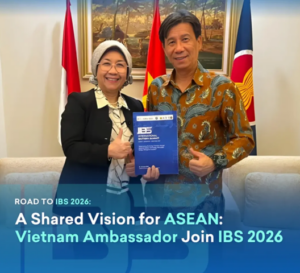
As we look toward the International Battery Summit 2026, the progress in Indonesia’s nickel value chain stands as a testament to the power of targeted industrial policy. The summit provides the definitive stage for stakeholders to witness how Indonesia has successfully navigated the transition from ore extraction to advanced chemical manufacturing. As the global demand for high-performance batteries continues to climb, the integration of Indonesia’s nickel resources into a sophisticated manufacturing ecosystem will be the primary driver of regional economic stability and the global net-zero mission. IBS 2026 will facilitate the partnerships and investments necessary to take this value chain to its ultimate conclusion: a fully domestic, world-class battery industry.