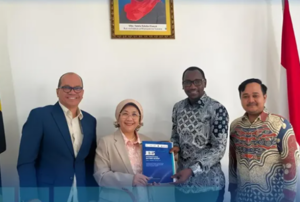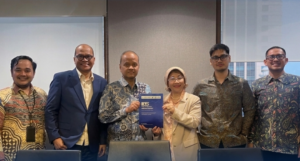
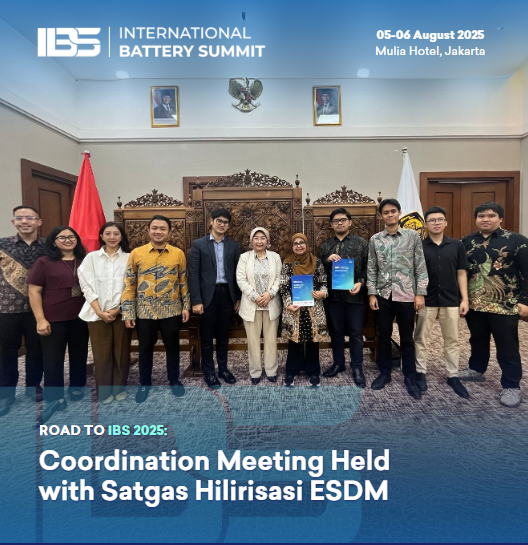
As preparations for the International Battery Summit (IBS) 2025 continue to gain momentum, a strategic coordination meeting was held on June 10, 2025, between the IBS organizing committee and the Energy and Mineral Resources (ESDM) Downstreaming Task Force (Satgas Hilirisasi ESDM). The high-level discussion aimed to align Indonesia’s national downstreaming agenda with the objectives of IBS 2025, further reinforcing the country’s ambition to become a global leader in battery innovation and sustainable energy development.
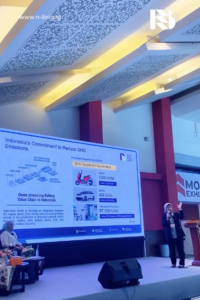
During the meeting, the National Battery Research Institute (NBRI), as a principal initiator of IBS 2025, presented the summit’s vision, strategic priorities, and its role in positioning Indonesia as a global hub for battery technology, critical minerals, and green industrial transformation. The discussion emphasized the importance of policy alignment and inter-agency collaboration in accelerating the development of Indonesia’s battery value chain and attracting international partnerships and investments.
Several key priorities were highlighted during the coordination meeting, including the strategic themes and focus areas of IBS 2025, support for industrial downstreaming and the expansion of Indonesia’s electric vehicle (EV) ecosystem, the integration of Environmental, Social, and Governance (ESG) principles and circular economy frameworks, as well as opportunities for collaboration between ESDM stakeholders and global partners.
The meeting also underscored the importance of IBS 2025 as a platform for fostering dialogue among policymakers, industry leaders, researchers, and investors to accelerate Indonesia’s energy transition and downstream industrial development. Through strong institutional coordination and shared commitment, IBS 2025 is expected to serve as a catalyst for innovation, investment, and sustainable growth within the battery and clean energy sectors.
As part of the Road to IBS 2025, this engagement marks an important milestone in strengthening government and institutional synergy to shape a resilient, competitive, and sustainable energy future, while reinforcing Indonesia’s strategic position in the global battery and clean energy landscape.