The integration of Artificial Intelligence (AI) into the battery and New and Renewable Energy (NRE) sectors has shifted from a peripheral digital trend to a core industrial necessity as of 2026. As global energy systems grow increasingly complex and decentralized, the limitations of traditional human-led modeling and manual diagnostics have become apparent. Today, AI-driven innovation acts as a sophisticated nervous system for the energy transition, optimizing everything from the atomic-level discovery of new battery chemistries to the macro-level stability of national power grids. This digital transformation is not merely enhancing efficiency; it is fundamentally compressing the timeline required to achieve a carbon-neutral economy.
The most profound impact of AI is currently being felt in the R&D labs of the battery industry through the deployment of autonomous materials discovery. Historically, developing a new battery chemistry took over a decade of trial-and-error experimentation. By 2026, AI-driven platforms and high-throughput “self-driving labs” have reduced this cycle to less than three years. Machine learning algorithms can now simulate millions of electrolyte-electrode interactions in seconds, identifying stable, high-performance combinations that would have been statistically invisible to human researchers. These AI models are particularly effective in optimizing next-generation chemistries, such as solid-state and sodium-ion systems, where understanding interfacial resistance and ion transport pathways at the nanoscale is critical for commercial scaling.
Beyond the laboratory, AI is revolutionizing the operational life of Battery Energy Storage Systems (BESS) through “Digital Twin” technology. By creating a virtual replica of a physical battery pack, operators can use AI to monitor real-time health (State of Health – SoH) and predict failures before they occur. Advanced Battery Management Systems (BMS) now leverage edge-AI to dynamically adjust charging profiles based on ambient conditions and historical usage patterns. This predictive capability is vital for the NRE sector, where batteries must manage the inherent intermittency of solar and wind power. AI-driven forecasting models can analyze satellite imagery and meteorological data to predict solar irradiance and wind speeds with over 95% accuracy, allowing BESS units to preemptively balance the grid and prevent the curtailment of green energy.
In the industrial landscape of 2026, AI is also the primary driver of the circular economy within the battery ecosystem. Sorting and recycling spent batteries—a historically labor-intensive and hazardous task—is now being automated through AI-powered robotic systems. These machines utilize computer vision and spectroscopic sensors to identify battery chemistries, formats, and residual voltages, facilitating the precise extraction of black mass. Furthermore, AI algorithms are being used to determine the “second-life” potential of EV batteries, calculating whether a used pack is better suited for stationary grid storage or immediate material recovery. This level of granular data management ensures that no watt of energy or gram of mineral is wasted, aligning industrial growth with stringent ESG frameworks.
The deployment of AI in the NRE sector also addresses the critical challenge of grid sovereignty. As Indonesia and other nations transition toward decentralized microgrids, AI-based energy trading platforms are enabling “Virtual Power Plants” (VPPs). These platforms coordinate thousands of small-scale battery units and renewable sources, treating them as a single, flexible power plant that can respond to demand surges in milliseconds. For an archipelago like Indonesia, this AI-driven coordination is essential for integrating renewable energy into remote areas without the need for massive, centralized infrastructure investments.
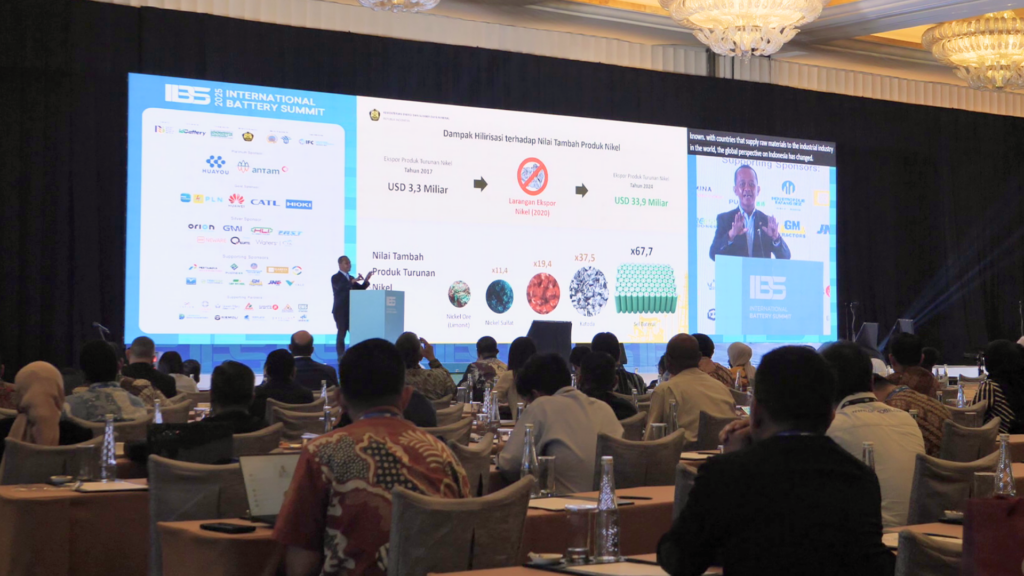
As the International Battery Summit 2026 convenes, the role of AI as a catalyst for energy innovation takes center stage. The summit provides the definitive platform for technology leaders and policymakers to discuss how to govern and scale these digital tools. From accelerating material science to securing the stability of renewable grids, AI is the engine driving the next phase of the global energy transition. IBS 2026 will be the site where the partnerships between data scientists and energy engineers are solidified, ensuring that the batteries of tomorrow are as intelligent as they are sustainable.