
The global battery industry has entered a period of profound industrial maturation, moving beyond the phase of rapid capacity expansion and into an era defined by process radicalization. As of 2026, the focus for the world’s leading manufacturers has shifted from simply adding more Gigafactories to fundamentally redesigning the production lines within them. The pursuit of the “Terawatt hour” scale is being met with a suite of manufacturing innovations—most notably dry electrode processing, high-speed automation, and structural cell integration—that are collectively slashing capital expenditures and energy intensity while setting new benchmarks for product consistency.
Perhaps the most significant manufacturing breakthrough to reach commercial scale in 2026 is the industrialization of dry electrode technology. For decades, the “wet” coating process—utilizing toxic solvents like NMP and massive drying ovens—represented the most energy-intensive and space-consuming segment of the battery factory. The successful transition to solvent-free, dry-film calendering has eliminated these bottlenecks, reducing factory footprints by up to 30% and cutting production energy consumption by nearly 40%. Leading innovators have now demonstrated that dry processing not only lowers costs but also enables thicker, higher-energy-density electrodes with improved fast-charging capabilities. This shift represents more than a technical tweak; it is a total reimagining of the battery factory as a leaner, faster, and more sustainable entity.
Parallel to these process innovations is the rise of structural battery design, which is blurring the lines between cell manufacturing and vehicle assembly. The transition from modular battery packs toward Cell-to-Pack (CTP) and Cell-to-Chassis (CTC) architectures has become the standard for 2025–2026. By removing the dead weight of internal modules and wiring, manufacturers are achieving volumetric efficiency gains of up to 20%. This trend is forcing a closer collaboration between battery producers and automotive OEMs, as the battery is increasingly engineered as a load-bearing component of the vehicle itself. The result is a lighter, more efficient electric vehicle (EV) that can travel further on the same amount of active material, directly addressing the industry’s dual goals of range parity and resource efficiency.
Intelligence at the manufacturing level has also seen a leap forward through the integration of AI-driven digital twins and real-time quality diagnostics. Modern production lines now utilize high-speed optical and X-ray inspection systems that can identify microscopic defects at the sub-millimeter level without slowing down the throughput. These “smart factories” leverage machine learning to predict equipment failures and optimize slurry mixing or film tension in real-time, pushing yield rates toward the elusive 95% mark. In an environment of tightening margins and aggressive cost targets, the ability to minimize scrap and rework has become a decisive competitive advantage, separating global leaders from legacy players.
Sustainability is no longer a peripheral consideration but a core design constraint in manufacturing technology. The 2026 landscape is defined by “circular manufacturing,” where end-of-life recycling and second-life preparation are integrated into the initial production logic. Factories are being designed with modular assembly techniques that simplify the eventually required disassembly and black mass recovery. Furthermore, the push for localization has led to the emergence of “Regional Battery Hubs,” where mineral processing and cell assembly are co-located to minimize the carbon footprint of logistics. This regionalization strategy, supported by policies like the EU Battery Regulation and the U.S. Inflation Reduction Act, is ensuring that the manufacturing technology of the future is as resilient as it is efficient.
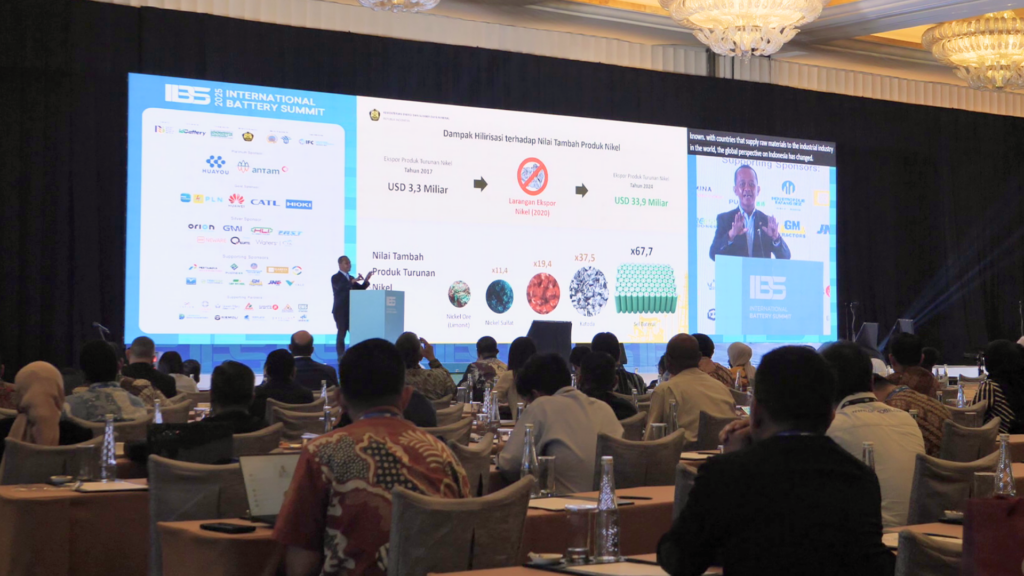
As the International Battery Summit 2026 convenes, these global trends will take center stage, providing a roadmap for the next decade of energy storage. The summit serves as the premier global platform for stakeholders to examine how these advanced manufacturing techniques—from solvent-free electrodes to structural integration—can be scaled to meet the soaring demand for EVs and stationary storage. In the race to net-zero, the winners will be those who master the art of manufacturing at the intersection of scale, speed, and sustainability. IBS 2026 is where the strategies for this terawatt era will be forged and executed.