
Home / Topic IBS / Strategic Investment on Accelerating Clean Energy Transitions

Capitalizing on the Transition: Orchestrating Strategic Investment Flows for Global Energy Decarbonization

Strategic Investment on Accelerating Clean Energy Transitions

The acceleration of the global clean energy transition has moved beyond the realm of climate advocacy and into the center of the global financial architecture. As of 2026, the capital requirements for achieving a net-zero trajectory are estimated to exceed $4 trillion annually, necessitating a profound shift in how strategic investments are structured and deployed. We are witnessing a transition from venture-led speculative funding toward large-scale institutional capital flows, characterized by a sophisticated blend of public de-risking and private sector agility. This investment surge is no longer concentrated solely in renewable generation but is increasingly targeting the critical “enablers” of the transition: grid infrastructure, battery storage, and the decarbonization of hard-to-abate industrial sectors.

A defining trend in the 2025–2026 investment landscape is the rise of “Blended Finance” models. Recognizing that the highest potential for renewable growth exists in emerging markets—which often face higher cost-of-capital hurdles—multilateral development banks and sovereign wealth funds are providing first-loss guarantees and concessional lending. These instruments are designed to “crowd-in” private commercial banks by mitigating perceived political and currency risks. In Southeast Asia, specifically within the framework of Just Energy Transition Partnerships (JETP), these strategic investments are facilitating the early retirement of coal-fired assets while simultaneously funding the massive build-out of solar-plus-storage hybrids. This synchronized capital deployment ensures that the energy transition is not only fast but also economically stable.

Strategic investment is also pivoting toward the mid-stream and up-stream segments of the clean energy supply chain. Investors have realized that the primary bottleneck for the energy transition is not a lack of wind or solar capacity, but a deficit in processed materials and manufacturing hardware. Consequently, 2026 has seen a record volume of “Direct Equity” investments from automotive OEMs and energy utilities into mining and refining projects. By securing minority stakes in nickel, lithium, and copper operations, these downstream players are ensuring supply security while providing the upfront capital necessary for miners to adopt sustainable, ESG-compliant extraction technologies. This vertical integration is creating a more resilient investment ecosystem that is less susceptible to the wild price swings of the commodity spot markets.

The role of government policy in de-risking these investments cannot be overstated. Frameworks such as the U.S. Inflation Reduction Act, the EU’s Green Deal Industrial Plan, and Indonesia’s downstreaming mandates have provided the long-term “policy certainty” that institutional investors demand. These policies offer tax credits, production subsidies, and streamlined permitting processes that effectively lower the “green premium” of new technologies. For instance, strategic investments in green hydrogen and long-duration energy storage (LDES)—technologies that were once considered too risky for commercial lenders—are now seeing multi-billion dollar financial closes due to guaranteed offtake agreements and government-backed floor prices.

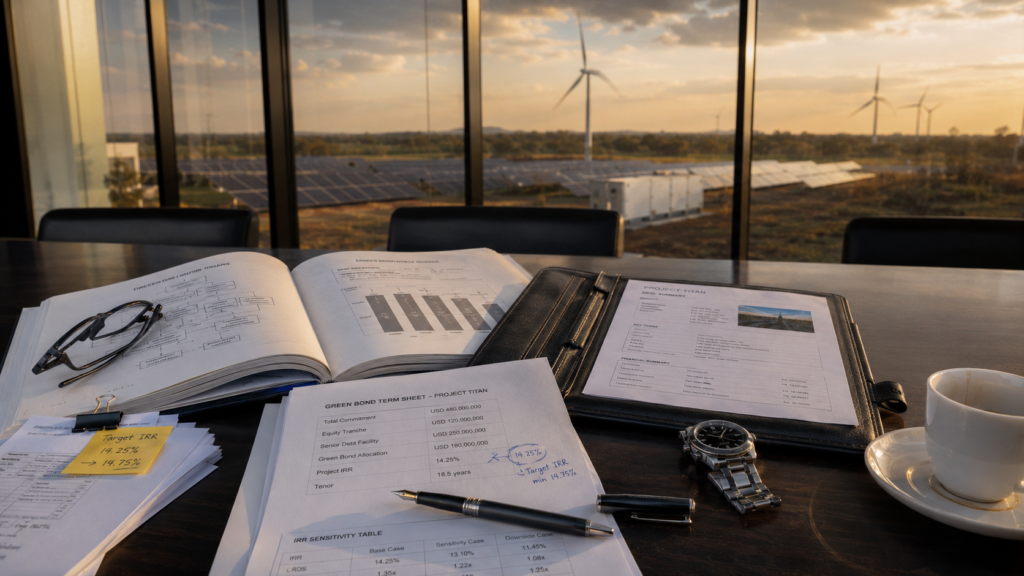
Furthermore, the “Quality over Quantity” mandate in investment has led to the universal adoption of rigorous ESG-linked financing. In 2026, the cost of capital is increasingly tied to a project’s carbon intensity and social impact. “Green Bonds” and “Sustainability-Linked Loans” have become the standard for funding energy infrastructure, requiring developers to provide real-time data on everything from biodiversity impact to local labor standards. This transparency is not just a regulatory hurdle; it is a strategic tool that reduces long-term operational risk and ensures that the clean energy transition enjoys broad social and political support.

As the International Battery Summit 2026 convenes, the focus remains on closing the “investment gap” that persists between current commitments and the 1.5°C pathway. The summit serves as the premier global platform where project developers meet the institutional investors who can provide the scale of capital required for the next decade. The dialogue here focuses on harmonizing global investment standards and identifying the next frontier of high-impact energy projects. IBS 2026 is the catalyst for these financial partnerships, ensuring that the capital of today is strategically aligned with the clean, sovereign, and sustainable energy systems of tomorrow. Through the strategic orchestration of these investment flows, we are turning the climate challenge into the greatest industrial opportunity of the 21st century.
Other Topics

Upcoming Event

Recent Updates

Stay informed with the latest about Internatnional Battery Summit

Join Our Free Webinar on Life Cycle Assessment (LCA) & Battery Passport for a Sustainable Battery Industry
As part of the Road to the International Battery Summit (IBS) 2026, the National Battery Research Institute (NBRI) invites industry professionals, researchers, policymakers, academics, and sustainability practitioners to join our Free Webinar exploring the future of sustainable battery development. As the global battery industry continues to grow, sustainability has become a key priority across the entire battery value chain. Building a competitive battery ecosystem requires greater transparency, accountability, and measurable environmental performance. Two essential frameworks driving this transformation are Life Cycle Assessment (LCA) and the Battery Passport, which enable organizations to evaluate environmental impacts, improve supply chain transparency, and meet evolving international sustainability standards. This webinar will provide practical insights into how these tools can support responsible battery production and strengthen Indonesia’s position in the global battery ecosystem. Participants will gain a deeper understanding of: The role of Life Cycle Assessment (LCA) in measuring the environmental impacts of lithium-ion batteries. The implementation and global significance of the Battery Passport framework. Strategies for improving sustainability, traceability, and transparency across the battery value chain. Emerging regulatory trends and international sustainability requirements. How LCA and Battery Passport can enhance the competitiveness and resilience of Indonesia’s battery industry. Webinar Details 📅 Date: Thursday, 25 June 2026 ⏰ Time: 14.00 – 17.00 WIB (08.00 – 11.00 BST) 📍 Platform: Zoom Meeting 🔗 Registration: https://bit.ly/WebinarBatteryTalkVol2 Be part of the conversation driving the future of sustainable battery innovation. Join leading experts and industry stakeholders as we explore practical solutions to build a more transparent, responsible, and globally competitive battery ecosystem. Register today and secure your place! #RoadtoIBS2026 #IBS2026 #NBRI #BatteryTalk #LifeCycleAssessment #LCA #BatteryPassport #BatterySustainability #BatteryInnovation #LithiumIonBattery #ESG #CircularEconomy #EnergyTransition #CleanEnergy #BatteryIndustry #SupplyChain #SustainableDevelopment #IndonesiaBatteryHub
25 June 2026
NBRI Leaders to Share Strategic Insights at Electric Vehicle Indonesia Forum 2026
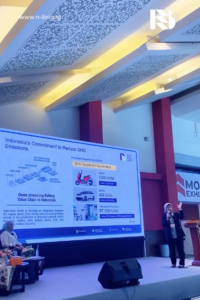
As part of the Road to the International Battery Summit (IBS) 2026, the National Battery Research Institute (NBRI) is proud to announce the participation of two of its distinguished leaders as speakers at the Electric Vehicle Indonesia Forum (EVIF) 2026, one of Indonesia’s premier platforms for advancing electric mobility and sustainable transportation. Representing NBRI, Prof. Dr. rer. nat. Evvy Kartini, Founder of NBRI and Research Professor at BRIN, together with Muhammad Firmansyah, S.E., MBA., Director of Business & Academy Development at NBRI and Chairman of the Indonesian Battery Association (Id Battery), will deliver a joint presentation titled: “Advancing Battery Technology for a Sustainable EV Future in Indonesia.” Their session will explore the latest developments in battery technology, the strategic role of innovation in accelerating Indonesia’s electric vehicle ecosystem, and the importance of collaboration among government, industry, academia, and research institutions to strengthen the nation’s battery value chain and support the energy transition. The discussion will also highlight Indonesia’s opportunities to become a global hub for battery manufacturing and clean energy innovation by leveraging its abundant critical mineral resources, advancing downstream industrialization, and fostering sustainable investment and technological development. Session Details 📅 Date: May 20, 2026 🕒 Time: 3:45 – 4:05 PM 📍 Venue: Hall C1, JIExpo Kemayoran, Jakarta As the Road to IBS 2026 continues, NBRI remains committed to driving knowledge exchange, strengthening strategic partnerships, and promoting innovation that supports Indonesia’s vision of becoming a global leader in battery technology, electric mobility, and sustainable industrial development. #RoadtoIBS2026 #IBS2026 #NBRI #ElectricVehicleIndonesiaForum2026 #EVIF2026 #ProfEvvyKartini #MuhammadFirmansyah #IdBattery #BatteryInnovation #ElectricVehicles #EnergyTransition #BatteryIndustry #CleanEnergy #SustainableMobility #CriticalMinerals #IndustrialDownstreaming #IndonesiaBatteryHub
20 May 2026
NBRI Visits Habibie & Ainun Library to Strengthen Indonesia’s Battery Innovation Vision
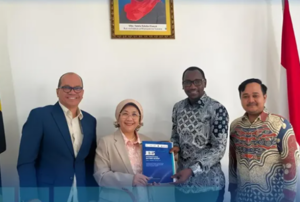
As part of the Road to the International Battery Summit (IBS) 2026, representatives from the National Battery Research Institute (NBRI) paid a strategic visit to the Habibie & Ainun Library for a discussion with Dr. Ilham Akbar Habibie on the future direction of Indonesia’s battery technology and innovation ecosystem. The meeting was attended by Prof. Evvy Kartini, Founder and Senior Researcher of NBRI, together with the Director of Strategic Partnership & Industry Development and the Project Management Office (PMO) team. The discussion focused on Indonesia’s long-term vision for strengthening research, technological innovation, industrial collaboration, and human capital development to accelerate the growth of the national battery industry. Held in a venue that symbolizes the enduring legacy of Prof. B.J. Habibie and Hasri Ainun Habibie, the meeting provided a meaningful opportunity to exchange ideas on how Indonesia can continue building a globally competitive battery ecosystem through science, technology, and strategic partnerships. Participants emphasized the importance of integrating research excellence, industrial capabilities, and forward-looking policies to support Indonesia’s ambition of becoming a leading player in the global battery value chain. The dialogue also highlighted the critical role of innovation ecosystems in fostering sustainable industrial development, encouraging cross-sector collaboration, and preparing the next generation of researchers, engineers, and industry leaders who will drive Indonesia’s clean energy transition. As the Road to IBS 2026 continues, this engagement reflects NBRI’s commitment to honoring Indonesia’s scientific legacy while advancing new opportunities for innovation and collaboration. By connecting visionary leadership, research institutions, industry, and policymakers, NBRI continues to strengthen the foundations of a resilient, innovative, and sustainable battery ecosystem that will support Indonesia’s future as a global battery and clean energy hub. #RoadtoIBS2026 #IBS2026 #NBRI #ProfEvvyKartini #IlhamHabibie #HabibieAinunLibrary #BatteryInnovation #Research #Science #Technology #EnergyTransition #BatteryIndustry #CleanEnergy #StrategicPartnership #IndustrialDevelopment #SustainableDevelopment #IndonesiaBatteryHub
19 May 2026
NBRI Strengthens Strategic Partnership with Vale to Advance Indonesia’s Battery Ecosystem
As part of the Road to the International Battery Summit (IBS) 2026, the National Battery Research Institute (NBRI) conducted a strategic visit to PT Vale Indonesia’s Pomalaa operation, reinforcing its commitment to strengthening partnerships that support the advancement of Indonesia’s battery industry and downstream mineral development. During the visit, Prof. Evvy Kartini met with Mr. Vinicius Mendes Ferreira from PT Vale Indonesia to discuss the latest technological developments resulting from Vale’s collaboration with Huayou in Pomalaa. The discussion focused on innovations in battery materials, opportunities to enhance Indonesia’s position within the global battery value chain, and the importance of sustainable industrial collaboration in supporting the country’s energy transition. Beyond the exchange of technical knowledge, the meeting highlighted the value of long-term partnerships between research institutions and industry leaders in accelerating innovation, strengthening local capabilities, and creating a resilient battery ecosystem. Both parties shared a common vision of advancing responsible downstream industrialization while fostering greater collaboration across the battery supply chain. PT Vale Indonesia also reaffirmed its strong support for the International Battery Summit (IBS) 2026, recognizing the summit as a strategic platform for bringing together policymakers, industry leaders, researchers, investors, and global stakeholders to shape the future of battery technology and sustainable energy development. As the Road to IBS 2026 continues, this engagement represents another important milestone in building meaningful partnerships that drive innovation, investment, and sustainable industrial growth. Through trust, collaboration, and a shared commitment to progress, NBRI and its partners continue to strengthen Indonesia’s ambition to become a leading global hub for battery innovation and clean energy. #RoadtoIBS2026 #IBS2026 #NBRI #PTValeIndonesia #Huayou #Pomalaa #BatteryIndustry #BatteryInnovation #CriticalMinerals #NickelDownstreaming #EnergyTransition #CleanEnergy #IndustrialDownstreaming #GlobalPartnerships #SustainableDevelopment #IndonesiaBatteryHub
18 May 2026
Strengthening Indonesia-Germany Collaboration for the Future of Battery Innovation
As part of the Road to the International Battery Summit (IBS) 2026, Prof. Evvy Kartini was invited by AHK Indonesia / EKONID (The German-Indonesian Chamber of Industry and Commerce) to speak at Business Talk: Indonesia and Germany — Opportunity for a Deeper Partnership. During the forum, she shared strategic insights on the rapid growth of Indonesia’s battery industry and highlighted the importance of stronger bilateral collaboration in accelerating the global energy transition. Prof. Evvy emphasized that the journey toward energy independence cannot be achieved alone. With Indonesia’s abundant critical mineral resources and Germany’s advanced technology and industrial expertise, both countries have a unique opportunity to build a resilient and competitive battery ecosystem. The discussion also underscored the role of international partnerships in driving innovation, strengthening supply chains, and creating sustainable industrial value that benefits both nations. As the Road to IBS 2026 continues, engagements such as this reinforce Indonesia’s commitment to becoming a key player in the global battery value chain and to fostering meaningful collaboration with international partners in shaping the future of clean energy.
11 May 2026
NBRI and PLN Strengthen Risk Management Collaboration to Support Indonesia’s 100 GWh Energy Vision
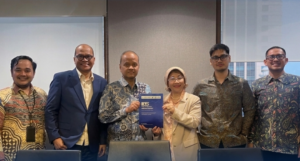
As part of the Road to the International Battery Summit (IBS) 2026, the National Battery Research Institute (NBRI) welcomed the Risk Management Team of PT PLN (Persero) for a strategic discussion on strengthening risk mitigation frameworks to support Indonesia’s accelerating energy transition. The meeting focused on the critical role of integrated risk management in ensuring the successful planning, implementation, and operation of large-scale renewable energy projects. As Indonesia advances toward its national ambition of achieving 100 GWh of energy storage capacity, effective risk governance is recognized as a key enabler for building a secure, reliable, and resilient energy system. Discussions highlighted the importance of developing comprehensive risk mitigation strategies across PLN’s business processes, particularly in supporting the deployment of Utility-Scale Solar Photovoltaic (PV) systems and Battery Energy Storage Systems (BESS). Participants exchanged perspectives on identifying operational, technical, financial, and regulatory risks while exploring best practices to strengthen project resilience and long-term sustainability. The dialogue also emphasized the value of collaboration between research institutions and state-owned enterprises in accelerating innovation, improving energy security, and supporting Indonesia’s clean energy roadmap. Through knowledge sharing and strategic partnerships, both NBRI and PLN aim to contribute to the development of a robust battery ecosystem that aligns with national decarbonization goals and the transition toward a low-carbon economy. As the Road to IBS 2026 continues, this engagement marks another important milestone in fostering cross-sector collaboration to support the future of Indonesia’s energy infrastructure. By integrating sound risk management practices with technological innovation, NBRI and PLN are working together to build a safer, more resilient, and sustainable energy ecosystem for generations to come. #RoadtoIBS2026 #IBS2026 #NBRI #PLN #RiskManagement #BatteryEnergyStorageSystem #BESS #SolarPV #RenewableEnergy #EnergyTransition #CleanEnergy #EnergyStorage #BatteryInnovation #EnergySecurity #Decarbonization #SustainableDevelopment #Indonesia100GWh
20 April 2026

Terms & Conditions

By clicking/tapping the registration button (In-person/Online), you agree to abide by these Terms and Conditions. Please read them carefully before making your purchase.

Ticket Purchase

  • The tickets must be purchased through the official event website.
  • Tickets are non-transferable and non-refundable.
  • The ticket price is determined based on the participant’s preferred attendance option, as detailed in the ‘Preferred Attendance Option Pricing’ section

Preferred Attendance-Based Ticket Pricing

  • Participants must select the ticket price category corresponding to their preferred attendance option at the time of purchase. The categories are as follows:
    • In-Person
    • Online
  • Prices for Online and In-person attendance are vary and will be clearly listed on the event website.

Ticket Payment

  • Payment for tickets must be made in full at the time of purchase.
  • All ticket sales are final. No refunds will be provided except in the case of event cancellation.
  • If the event is canceled, ticket holders will be offered a full refund or the option to transfer their ticket to a rescheduled date.

In-Person Entry and Attendance

  • Upon successful payment, you will receive a confirmation email with your e-ticket.
  • All attendees must present a valid ticket for entry.

Online Attendance

  • Upon successful payment, you will receive a confirmation email with link and access key to event meeting platform.